Strong grades start with strong attention, and attention is a skill we can train.
Most parents we talk with are not looking for a miracle solution, but a practical way to help kids focus, listen the first time, and follow through on schoolwork without constant reminders. That is exactly why Youth martial arts has become such a powerful support tool for students in Fresno. When training is structured, consistent, and coached the right way, it turns “pay attention” into a habit your child can actually practice.
In our kids and teen classes, we do not treat focus like a personality trait you either have or you do not. We treat it like a muscle. We train it through clear rules, repeatable routines, and problem solving on the mat. Over time, that same ability to concentrate, reset after frustration, and stick with a task shows up in homework, reading, and classroom behavior.
This article breaks down how youth training supports school performance, what your child actually practices in class, and how you can reinforce those benefits at home without turning your evenings into a second school day.
Why focus is hard for kids right now (and why training helps)
Kids are asked to switch tasks constantly: from a teacher’s instructions to a worksheet, to a device, to another class, to sports, to home. Even motivated students can struggle to sustain attention when life is nonstop. The result is often not a lack of intelligence, but a lack of attention control: drifting, rushing, forgetting directions, or freezing when something feels difficult.
Youth martial arts helps because class is built around a simple loop: listen, try, adjust, and try again. That loop is not abstract. It is physical and immediate. If your child does not listen to the details, the technique does not work. If your child rushes, balance disappears. If your child gives up after a mistake, progress stalls. Training gently but consistently rewards the same behaviors teachers and parents want to see: calm focus, self control, and persistence.
In other words, attention is not demanded. It is coached.
The “mat to classroom” transfer: how skills carry over
A fair question we hear is: does this really help grades, or does it just make kids tired? The answer comes down to transfer. We build specific mental habits in training that translate directly into school routines.
Better listening through clear instruction cycles
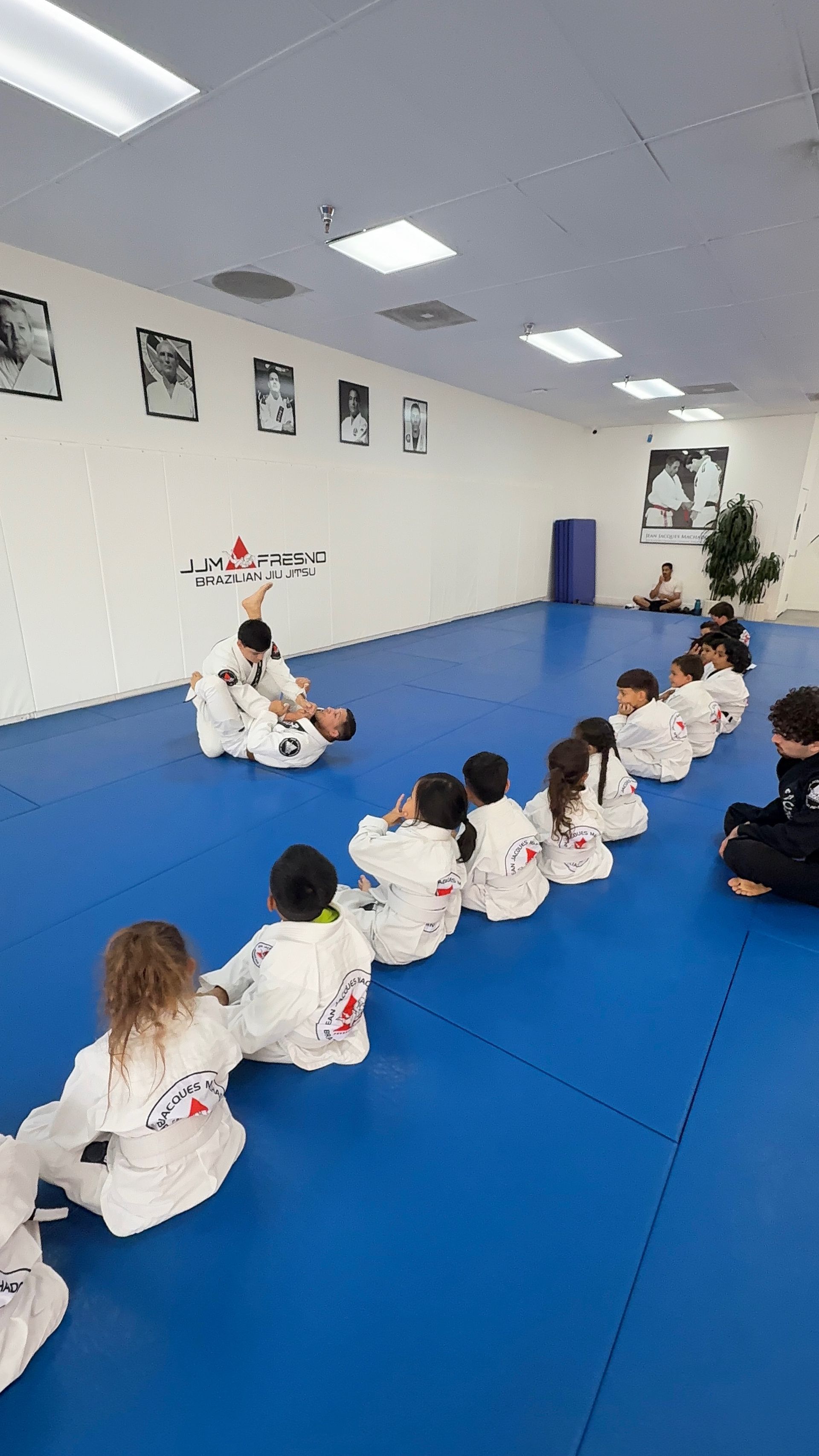
In class, we teach in short chunks: demonstration, key details, partner practice, feedback, repeat. Kids quickly learn that missing a detail costs time. When your child practices listening with a purpose several times per week, classroom listening improves because the brain gets used to holding instructions long enough to act on them.
Improved working memory through sequences
Brazilian Jiu-Jitsu is full of sequences: grips, posture, steps, angles, transitions. Remembering a few steps in order is basically working memory practice, just disguised as something fun. Over time, that can support multi step academic tasks like math processes, writing structure, and following directions.
Emotional regulation under pressure
School pressure is real: tests, social stress, public mistakes at the board, performance anxiety. On the mat, pressure is part of the environment, but it is controlled. Kids learn to breathe, slow down, and keep thinking. That “calm under pressure” skill is one of the biggest academic benefits we see, especially for students who tend to shut down when work gets hard.
Why Brazilian Jiu-Jitsu is uniquely good for focus
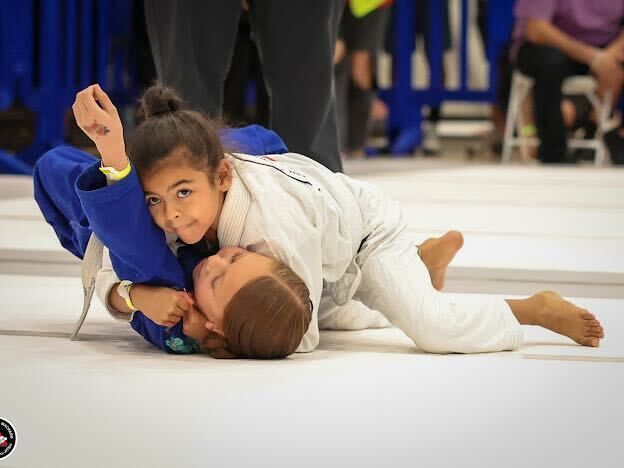
Many families come in thinking martial arts is mostly about punching and kicking. Our youth program centers on Brazilian Jiu-Jitsu, which is often described as a grappling art, but we think of it as problem solving with your body.
Here is why that matters for attention:
It requires real time decision making
In live training, your child cannot zone out and succeed. Jiu-Jitsu constantly asks questions: Where is the space? Where is the grip? What is the next safe step? That creates active attention, not passive attention. Active attention is the type students need for reading comprehension, math reasoning, and writing.
Technique beats strength, which rewards patience
Kids quickly learn that muscling through does not work for long. Proper technique requires slowing down, noticing details, and choosing the right timing. That is the same mindset that helps a student re read a confusing paragraph instead of guessing.
Small improvements are obvious
When a move starts working, your child feels it immediately. That quick feedback loop builds motivation, and motivation makes focus easier. It becomes normal to practice a skill repeatedly until it clicks, which is the exact approach that helps with spelling, multiplication facts, and essay drafting.
Youth martial arts and the discipline that schools want (without the nagging)
Discipline does not have to mean harshness. In our gym, discipline is mostly structure: consistent expectations, respectful behavior, and accountability. Kids do well with that, even kids who struggle with it at home or in class, because the environment is clear and predictable.
We reinforce discipline in ways that naturally connect to school performance:
• Showing up on time and being ready to start
• Following rules even when excited or distracted
• Waiting for turns and respecting partners
• Accepting coaching without taking it personally
• Finishing rounds and drills even when tired
That might sound simple, but it adds up. When your child practices those habits week after week, you often notice less arguing about routines at home. Not perfect, of course. Kids are kids. But the baseline improves.
Goal setting that makes sense to kids: how the belt system supports academics
One reason Youth martial arts in Fresno has grown so much is that kids respond well to visible progress. The belt system gives structure to long term improvement. Instead of vague goals like “be more focused,” kids can aim for specific skills and behaviors tied to advancement.
We treat goal setting as a skill in itself:
Short goals, long goals, and checkpoints
A student might work on one small objective for a week or two, like keeping posture, using frames, or staying calm during sparring. Then we layer in longer goals, like mastering a set of fundamentals. This builds the ability to break big tasks into smaller steps, which is basically study skills.
Effort becomes measurable
Kids learn that improvement is not random. If you train consistently and practice the right way, you grow. That cause and effect belief is powerful for school because it shifts the mindset from “I am just bad at math” to “I can get better if I work the process.”
What a typical youth class looks like (and where focus is trained)
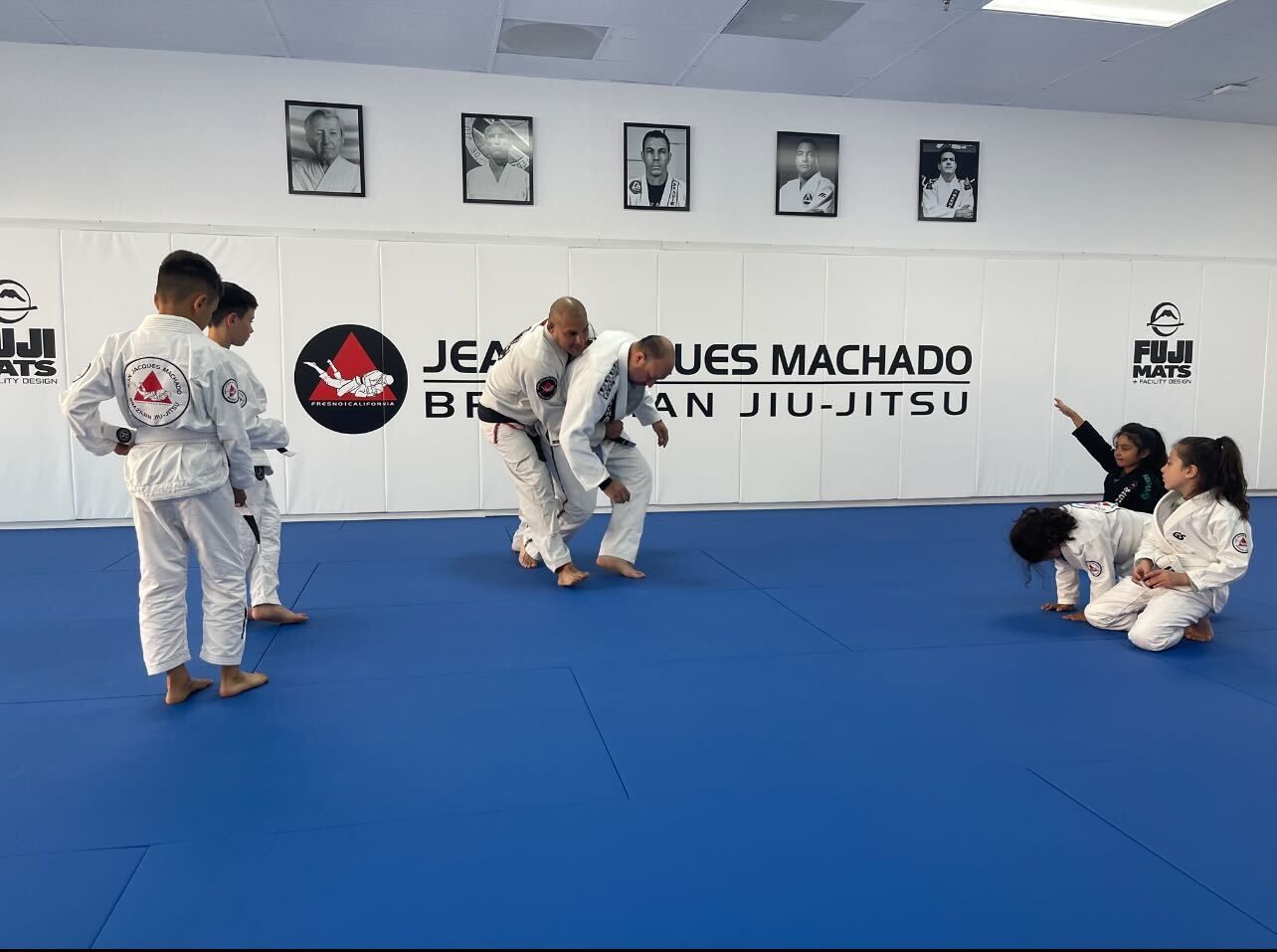
Parents often ask what we actually do during a session. While each class evolves based on age and experience, our format stays consistent enough that kids feel anchored.
Here is a simple view of how focus gets trained during class:
1. Quick lineup and expectations so kids switch into training mode
2. Warm up that builds coordination and controlled energy
3. Technique lesson with a few clear details to remember
4. Partner drilling with coaching and corrections
5. Positional training so kids solve problems in a controlled setting
6. Cool down and brief wrap up so kids leave with one clear takeaway
That structure matters. Kids learn to transition between activities without losing control, and that same ability to transition helps in school: from recess to reading, from math to writing, from class to homework.
How youth training supports better behavior at school
Focus is not only about academics. It also affects behavior. When students struggle to focus, behavior often follows: blurting out, getting out of the seat, interrupting, or clowning to escape frustration. While we never promise specific outcomes, we routinely see improvements in the building blocks that drive better behavior.
Respectful communication
We coach kids to look at the instructor when listening, ask questions appropriately, and treat partners with respect. Those social rules mirror classroom expectations.
Boundaries and body control
Jiu-Jitsu teaches kids to control their bodies. That includes staying safe, using appropriate intensity, and stopping immediately when asked. This kind of self control can reduce impulsive behavior in school settings.
Confidence without attitude
Confidence is one of the most common changes families notice. When a child feels capable, school can feel less threatening. Instead of acting out to avoid embarrassment, your child is more likely to try.
Confidence, bullying, and why calmer kids learn better
Bullying is a serious concern in any community, and it affects school performance more than many people realize. Stress and fear steal attention. When kids worry about social situations, academics suffer.
Our approach focuses on building calm confidence and practical awareness. As kids get more comfortable with movement, balance, and problem solving, our goal is that your child carries themself differently: shoulders up, eyes forward, voice steady. That kind of presence can discourage bullying and reduce anxiety.
And when anxiety drops, learning improves. That is not motivational fluff. It is basic brain function.
Safety and supervision: what parents should know
Safety is a reasonable concern, especially when you hear words like sparring or grappling. Our youth program is structured to keep training age appropriate and closely supervised. We teach kids to protect partners, respect taps, and practice with control. We also match students carefully during partner work so size and experience are appropriate.
If your child is brand new, we ease into contact progressively. We would rather build great habits than rush. The benefit for focus comes from consistency, not intensity.
How to support the benefits at home (without overdoing it)
You do not need to turn into a coach at home. In fact, that can backfire. A light touch works best. Here are a few ways to reinforce what kids learn in martial arts in Fresno while keeping your home life normal:
• Use the same simple language we use in class: breathe, slow down, try again
• Praise specific effort, not vague talent, like “you stuck with that homework even when it was annoying”
• Create one predictable homework routine, even if it is short
• Ask your child to teach you one technique detail after class, which strengthens memory and communication
• Keep sleep and nutrition steady on training days, since tired brains struggle to focus
These small habits help your child connect training to school without feeling pressured.
Who benefits most from youth martial arts in Fresno?
We work with a wide range of students, from very energetic kids to quiet kids who need help speaking up. While every child is different, Youth martial arts tends to be especially helpful for:
• Students who know the material but rush and make careless mistakes
• Kids who struggle with frustration and give up quickly
• Teens who feel stressed and need a healthy outlet that builds structure
• Children who need confidence and boundaries in social situations
• Families who want an activity that supports both behavior and fitness
Age matters too. Many kids can start around age four, and we see strong growth as kids move into the nine to twelve range because attention and coordination develop quickly during that stage.
Take the Next Step
If you want an activity that supports attention, discipline, and calmer confidence, our youth program is built to do more than keep kids busy for an hour. We coach focus through structured routines, goal driven progress, and problem solving that keeps your child engaged in a way screens and lectures usually cannot.
When you are ready, Jean Jacques Machado Jiu-Jitsu Fresno is here to help you plug Youth martial arts into your child’s weekly routine so the benefits show up where you really want them: in school, at home, and in day to day choices.
No experience is required to begin to join a martial arts class at Jean Jacques Machado Fresno and learn step by step.