
Train your body with purpose and your mind tends to follow, sharper, calmer, and more focused.
Most people come to martial arts for something practical: fitness, confidence, self-defense, a new challenge. What often surprises students is what happens between the ears. When you train consistently, your attention improves, your stress response changes, and your ability to solve problems under pressure gets noticeably better.
In Fresno, life moves fast and your brain is asked to do a lot. Our goal is to give you a training environment that upgrades your physical skills while also building mental clarity you can actually use at work, at home, and in the everyday moments where focus tends to slip.
Why martial arts training changes your brain, not just your body
When you train, you are not only repeating movements. You are building a feedback loop between intention and action. In plain terms, your brain predicts what should happen, you move, you feel what really happened, and you adjust. That cycle is a powerful driver of learning, and it is one reason skill-based training can feel so mentally energizing.
Martial arts also create structured novelty. Each class has familiar patterns, but the details shift constantly. Timing, balance, distance, and decision-making change from partner to partner. That combination, structure plus variation, is one of the most reliable ways to keep your brain engaged without feeling scattered.
Another big factor is stress inoculation. Not panic, not chaos, but controlled discomfort. You learn to breathe, think, and make choices while your heart rate is up. Over time, you start to recognize the difference between real danger and simple intensity, and that alone can improve day-to-day concentration.
Focus is a skill, and we train it on purpose
A lot of people treat focus like a personality trait: you either have it or you do not. We see it differently. Focus is a trainable skill, and martial arts give you a clear way to practice it repeatedly.
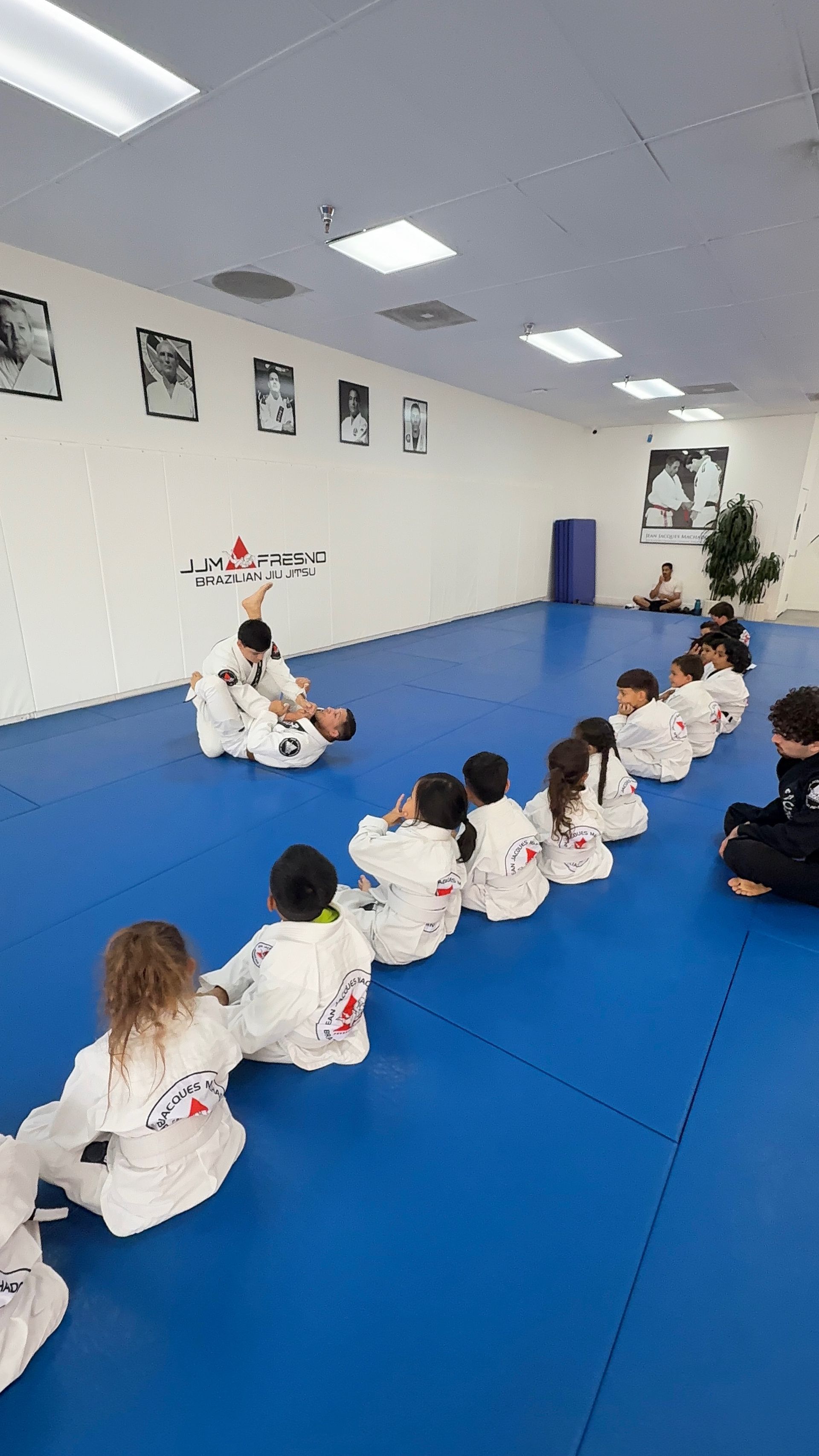
In class, you are asked to do one thing well, then layer complexity. First you learn the movement. Then you learn the timing. Then you learn how it changes when a partner resists. This progression forces your attention to stay in the present. If your mind wanders, your technique falls apart quickly, which is oddly helpful feedback.
We also build focus through coaching cues that are simple and immediate. Instead of trying to remember ten corrections at once, we guide you to notice one or two high-impact details, then test them right away. That tight loop of instruction and practice is where attention sharpens.
The “decision-making under pressure” advantage
Everyday life has pressure that does not look like a fight. Deadlines, conflict, fatigue, information overload. Martial arts in Fresno can be a reset because you practice decision-making in a cleaner environment: clear constraints, clear goals, and a partner in front of you giving honest feedback.
When you spar or drill with increasing resistance, your brain gets better at sorting signal from noise. You learn to prioritize: posture before submission, balance before speed, breathing before brute force. That habit of prioritizing carries over. Students often tell us they feel less reactive outside the gym, and more able to choose a response instead of getting pulled into the moment.
There is also the confidence piece, and we mean the quiet kind. When you know you can handle intensity, your brain stops spending so much energy on “what if” spirals. That frees up attention for what you actually want to do.
Why Brazilian Jiu-Jitsu is especially effective for cognitive training
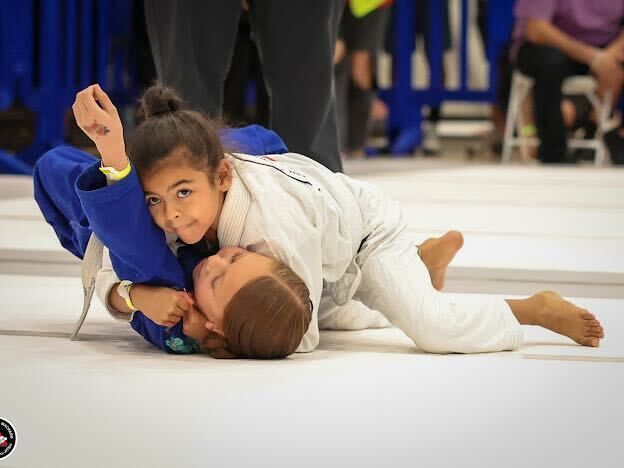
Brazilian Jiu-Jitsu is often described as physical chess, and that is not just a catchy line. It is a problem-solving art. You are constantly reading balance, grips, pressure, and positioning. You are making micro-decisions every few seconds, and your partner is changing the puzzle as you solve it.
Because the training is close-range and technical, you cannot rely on raw athleticism alone for long. Technique matters, and so does patience. You learn to slow down mentally even while your body is working hard. That blend of effort and calm is a real mental skill.
BJJ also rewards curiosity. If something does not work, you can adjust the angle, change the timing, switch to a different option, and test again. Over months, that becomes a mindset: experiment, observe, refine. It is hard not to become a better learner when you train that way.
Adult training: attention, stress relief, and a more organized mind
Adult martial arts in Fresno should fit real schedules and real energy levels. We build our classes so you can show up after work, train hard, and leave feeling better than when you walked in, not drained and wrecked for the next day.
One underrated benefit for adults is the mental “single tasking” that happens on the mat. Your phone is away. Your inbox is not buzzing. You have one job: be present, move with control, and learn. For many adults, that becomes a weekly anchor that improves mood and focus outside the gym too.
Stress relief is not only about sweating. It is about completing the stress cycle. You elevate your heart rate, you breathe through effort, you regain control, and you come down. That physical rhythm teaches your nervous system that intensity is survivable and manageable. It is a small thing, but it adds up.
How we structure classes to support learning and brainpower
We take teaching seriously because the brain learns best with clarity and progression. Our classes are designed to reduce confusion and increase useful repetitions, without turning training into a boring routine.
Here is what you can expect from the way we teach:
• A clear theme for the day so your brain can organize the lesson instead of collecting random moves
• Step-by-step technique details, then immediate practice, so you feel the difference right away
• Partner drills that start cooperative and gradually add resistance, building real timing and confidence
• Coaching that focuses on a few high-value fixes, not a flood of corrections that you cannot apply
• Live training options that are scaled to your experience level, so challenge stays productive
This structure matters because learning is not just about effort. It is about the quality of feedback you get, and how quickly you can apply it.
The brain-body connection: coordination, balance, and reaction time
Coordination is one of the clearest links between martial arts and cognitive performance. When you learn new patterns, your brain has to map where your body is in space, predict force, and adjust quickly. That is a lot of processing, and it is exactly the kind of processing that supports better movement and sharper attention.
Balance training is another quiet upgrade. In grappling, balance is not static. You are balancing while pushing, pulling, turning, and changing levels. Your brain learns to stabilize under changing conditions. Over time, you move with more control in everyday life too.
Reaction time improves, but not in a twitchy way. You get better at noticing the early signs of a movement, then responding with the right tool instead of the first impulse. That is focus in action: notice, choose, commit.
A realistic weekly plan for better focus
You do not need to train every day to get cognitive benefits. Consistency beats intensity, especially at the start. If your goal is better focus, a calmer stress response, and steady skill growth, we usually recommend a simple approach.
A practical starting plan looks like this:
1. Train 2 days per week for the first month to build the habit and reduce soreness
2. Add a third day when your energy and schedule feel stable, not when motivation spikes
3. Pick one personal focus per week, like posture, breathing, or staying relaxed under pressure
4. Take brief notes after class so your brain “closes the loop” and retains what you learned
5. Reassess every 6 to 8 weeks and adjust your schedule based on recovery and progress
This kind of plan is sustainable, and it is sustainable plans that change your mind and body.
Common questions about martial arts and mental performance
People are curious about the “science” side, and we get it. You want to know what changes and how long it takes.
Does training help with attention?
Yes, because you practice attention directly. You cannot learn timing, distance, and technique details without being present. Over weeks, most students notice they can concentrate longer, especially after class becomes part of their routine.
What if you feel anxious in a new class?
That is normal. We keep the environment supportive and structured so you can learn without feeling thrown into the deep end. The first few sessions are often about getting comfortable with the process.
Is it too late to start as an adult?
Not at all. Adult students learn differently than kids, but adults often improve quickly because you can understand concepts, ask questions, and connect training to real goals.
How does this apply to life in Fresno?
Fresno is busy and demanding, and your attention is pulled in a dozen directions. Martial arts in Fresno can become a reliable space where you practice focus, effort, and calm in a way that is hard to replicate elsewhere.
Take the Next Step
If you want training that builds real skill while also upgrading your focus and problem-solving, our program is designed for exactly that blend of physical and mental development. We keep the coaching clear, the progression practical, and the atmosphere welcoming, because that is what helps you learn faster.
When you are ready, we would love to show you how Brazilian Jiu-Jitsu can support your goals, whether those goals are fitness, confidence, or simply having a sharper mind in a noisy world. You can experience that approach firsthand at Jean Jacques Machado Jiu-Jitsu Fresno, right here in Fresno.
See what makes training at Jean Jacques Machado Jiu-Jitsu Fresno unique by joining a martial arts class today.